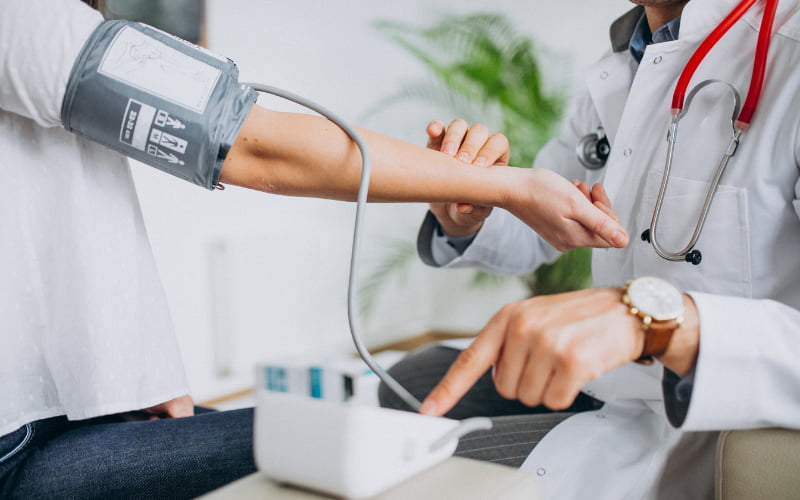
Most people can recite their blood pressure numbers the way they’d recite a phone number — memorized, rarely questioned, never quite understood. A nurse reads out “128 over 82,” you nod like that means something, and you move on with your day. It’s one of the few vital signs we all get measured regularly and almost never get explained.
That gap matters, because blood pressure is one of the most useful early-warning signals the body offers. Unlike a lot of health problems, it rarely announces itself with symptoms until something has already gone wrong. Understanding what the two numbers actually measure — and what counts as a real concern versus normal variation — is worth ten minutes of your attention.
What systolic and diastolic actually measure
The top number, systolic pressure, is the force in your arteries at the exact moment your heart contracts and pushes blood out. The bottom number, diastolic pressure, is the pressure that remains between beats, while the heart is relaxed and refilling. Both are measured in millimeters of mercury, a unit left over from the mercury-column devices doctors used for most of the last century.
Think of your arteries as a garden hose. Systolic pressure is what you feel at the nozzle the instant someone squeezes the spigot; diastolic is the baseline pressure still in the hose when nobody’s squeezing. A healthy cardiovascular system keeps both numbers within a fairly narrow range, because arteries are living tissue, not rigid pipe — sustained excess pressure damages them over time.
Where the healthy ranges actually fall
Guidelines have shifted over the past decade, and different countries draw the lines slightly differently, but the broad categories most doctors in the U.S. use now look roughly like this:
- Normal: below 120/80
- Elevated: systolic 120–129, with diastolic still under 80
- Stage 1 hypertension: systolic 130–139, or diastolic 80–89
- Stage 2 hypertension: systolic 140 or higher, or diastolic 90 or higher
- Hypertensive crisis: above 180/120, which warrants urgent medical attention
Notice that only one number needs to cross the line to move you into a higher category — an isolated high systolic reading with a perfectly normal diastolic still counts. That surprises a lot of people who assume both numbers have to be elevated for a reading to matter.
Why one reading rarely tells the whole story
Blood pressure isn’t a fixed number; it’s closer to a rhythm that shifts throughout the day. It dips during sleep, climbs when you wake up, spikes with caffeine, exercise, or a stressful phone call, and can jump 10 to 20 points just from the anxiety of sitting in a doctor’s waiting room — a phenomenon clinicians call “white coat hypertension.”
That’s why a single elevated reading at a check-up isn’t usually enough to diagnose hypertension. Doctors generally want to see a pattern across multiple readings, on different days, ideally including some taken at home where you’re relaxed and the cuff isn’t being applied by someone in scrubs. If your doctor hasn’t asked you to track readings at home before making a diagnosis, it’s a reasonable thing to bring up yourself.
Getting an accurate reading at home
Home monitors are inexpensive and, when used correctly, quite reliable. A few details make a bigger difference than most people expect:
- Sit with your back supported and feet flat on the floor for at least five minutes before measuring — don’t take a reading standing up or mid-conversation
- Keep your arm at heart height, resting on a table rather than held up in the air
- Skip caffeine, exercise, and smoking for 30 minutes beforehand
- Take two readings a minute apart and use the average, rather than trusting a single number
A cuff that’s too small for your arm can inflate readings by a meaningful margin, so it’s worth checking that your monitor’s cuff actually matches your arm circumference rather than grabbing whatever came in the box.
Why the numbers matter more than they seem to
High blood pressure earned the nickname “the silent killer” honestly. It typically causes no symptoms at all until it has already contributed to damage — thickened artery walls, an overworked heart muscle, strain on the kidneys’ delicate filtering systems. Sustained hypertension is a major contributor to heart attack, stroke, and kidney disease, and the risk climbs steadily as the numbers rise, without some dramatic threshold where danger suddenly appears.
The damage isn’t happening someday. If your numbers have been high for months, it’s happening now — quietly, in vessels you can’t see or feel.
The encouraging flip side is that blood pressure responds to change faster than most chronic conditions. Reductions in sodium intake, regular movement, and moderate weight loss can lower readings within weeks, sometimes enough to move someone back a full category without medication.
What actually moves the needle
The interventions with the strongest evidence behind them aren’t exotic. Cutting back on sodium — most of it from processed and restaurant food rather than the salt shaker — tends to produce a measurable drop within a month. Regular aerobic activity, even just brisk walking most days, lowers resting blood pressure over time by making the heart pump more efficiently. Limiting alcohol, managing weight, and getting consistent sleep all contribute as well, and they tend to reinforce each other rather than working in isolation.
For some people, lifestyle changes alone aren’t enough, and that’s not a personal failing — genetics, age, and other conditions all play a role that habits can’t fully override. Medication for hypertension is common, generally well-tolerated, and dramatically reduces long-term risk when lifestyle changes fall short.
When to actually call a doctor
A single elevated reading at home usually isn’t an emergency. But certain signs deserve prompt attention: a reading above 180/120, especially paired with chest pain, shortness of breath, severe headache, or vision changes. Those symptoms together can signal a hypertensive crisis, and it’s worth treating as urgent rather than waiting to see if it passes.
Outside of an emergency, if your home readings are consistently landing in the elevated or Stage 1 range, that’s still worth a conversation with your doctor — not because you need to panic, but because catching the trend early is exactly what makes blood pressure one of the more manageable long-term health risks, rather than one that manages you.