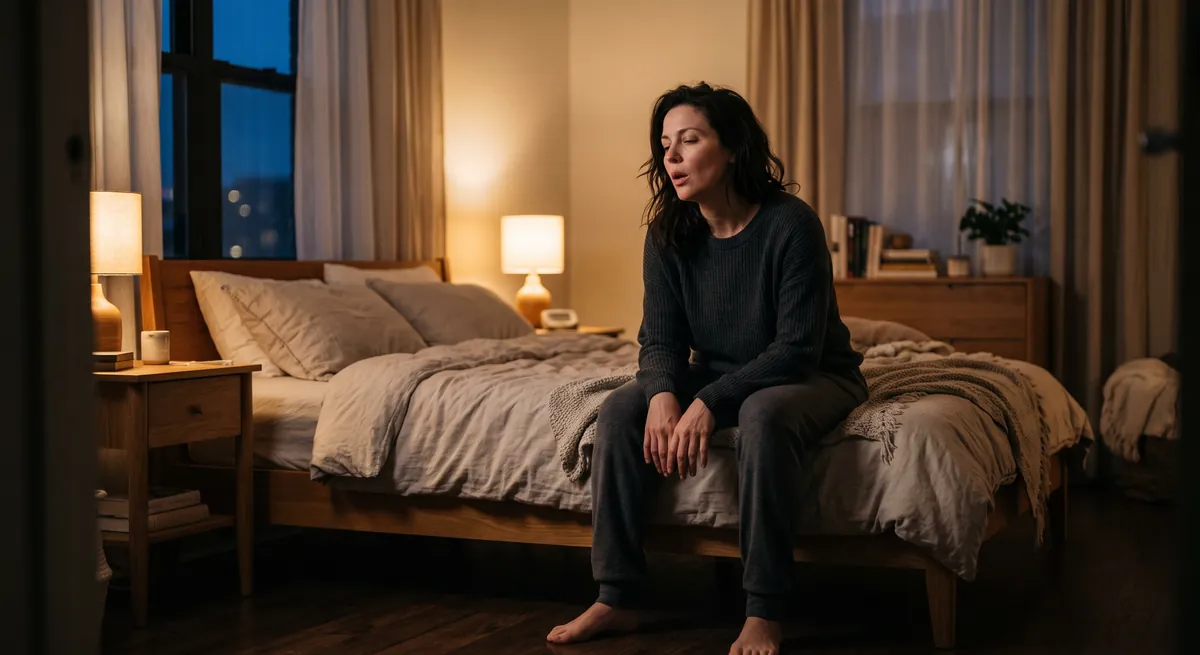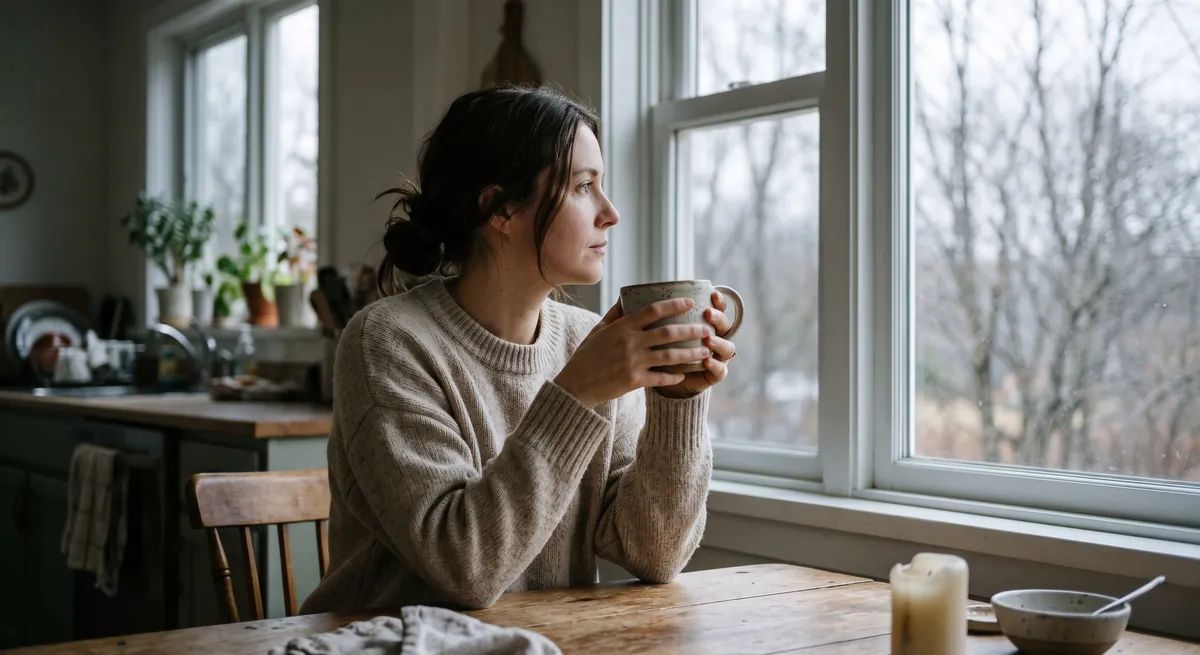
The clocks go back, and suddenly it’s dark when you leave work. For most people that change is mildly annoying. For some, it marks the start of a slide that runs until spring: heavier sleep, a pull toward bread and pasta, and a flatness that no amount of coffee lifts.
That pattern has a name, seasonal affective disorder, or SAD. And the treatment most people have heard of, a bright lamp on the breakfast table, has both more evidence behind it and more caveats than the ads suggest.
More than the winter blues
Almost everyone feels a bit slower in the darker months. SAD is different in degree and in pattern. It’s a form of depression that comes back at the same time of year, usually starting in autumn and lifting in spring, and it lasts around four to five months.
To be diagnosed, the seasonal episodes generally need to have happened for at least two consecutive years, and to be more common than depression at other times of year. It tends to start in young adulthood, and it’s more common in women and in people who live farther from the equator.
Alongside the usual signs of depression (low mood, losing interest in things you normally enjoy, trouble concentrating, feelings of hopelessness), the winter form has its own fingerprint:
- sleeping much more than usual and still feeling tired
- craving carbohydrates and gaining weight
- pulling away from friends and plans, a sort of hibernation
A less common summer pattern exists too, and it looks almost like the reverse: poor sleep, low appetite, restlessness and anxiety.
Why less light can mean lower mood
The leading explanation centers on the body clock. Morning light reaching the eyes is the main signal that sets your internal 24-hour rhythm. When dawn comes later and the days are dim, that rhythm can drift out of step with your actual schedule, which affects sleep, energy and mood together.
Researchers have also looked at serotonin, a brain chemical involved in mood, and melatonin, the hormone that rises in darkness and makes you sleepy. In some people with SAD, both seem to shift with the seasons in ways that fit their symptoms. No single mechanism explains every case, but light sits at the center of most of them.
How light therapy is meant to work
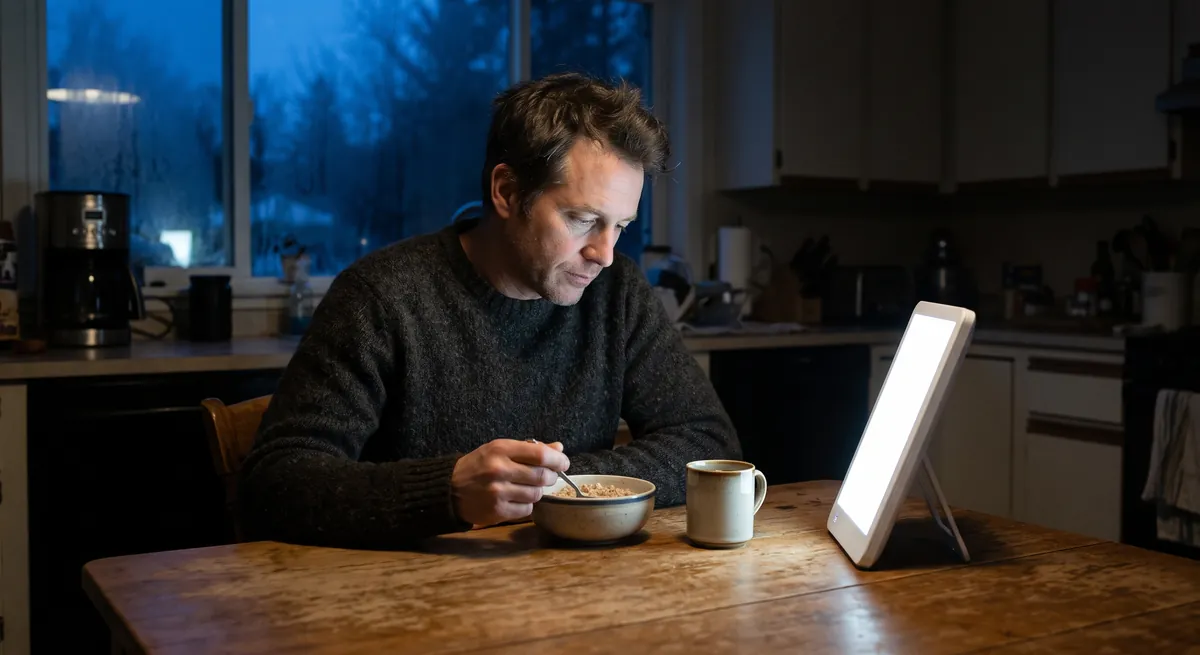
The idea is to give the brain the strong morning signal that winter withholds. Ordinary indoor lighting is far too dim to do it. The standard used in research and clinical guidance is a light box that delivers 10,000 lux, many times brighter than a typical living room.
The National Institute of Mental Health describes the usual routine as about 30 to 45 minutes a day, usually first thing in the morning, from autumn through spring. A few practical points help it work:
- Sit within about arm’s length of the box, roughly two feet away, with the light reaching your eyes from the side or above.
- Don’t stare into it. Reading, eating or answering email while it’s on is fine.
- Keep to a regular time, ideally soon after waking. Evening sessions can push your body clock later and disturb sleep.
- Choose a box made for this purpose, which filters out ultraviolet light. Tanning beds are not a substitute.
Many people notice a difference within a week or two. If symptoms return when you stop, the usual approach is to continue daily until spring, when natural light takes over.
What the evidence actually shows
Light therapy has been studied for decades, and pooled analyses of randomized trials generally find it beats a dim-light placebo. The average effect is moderate, though, and many of the trials were small.
Designing a convincing placebo for a bright light is hard, too. People can tell when a lamp is bright. That makes it difficult to separate the light’s own effect from the hope of trying something.
National guidance reflects that uncertainty. The NHS doesn’t usually provide light boxes, saying there isn’t enough evidence to be sure they work, while also acknowledging that many people find them helpful. US clinicians tend to treat light therapy as a standard first option for winter-pattern SAD. For most people it’s a reasonable thing to try, with the expectation that it may help some and leave others needing a different treatment.
Who should check with a doctor first
For most people, side effects are mild and fade quickly: eyestrain, headaches, nausea, feeling jittery or irritable. Cutting the session shorter or sitting a little farther away often helps.
Some people need medical advice before starting. That includes anyone with bipolar disorder, because bright light can trigger mania or hypomania in some people, as well as anyone with an eye condition such as macular degeneration or glaucoma. It also includes people taking medicines that increase light sensitivity, including some antibiotics, some acne treatments and the herbal remedy St John’s wort.
And if your low mood includes thoughts of self-harm or suicide, don’t wait to see whether a lamp helps. Contact a doctor promptly, or in the US call or text 988.
When light isn’t enough
Light therapy is one of several treatments that work for SAD. A version of cognitive behavioral therapy designed for SAD, often run as group sessions over about six weeks, has done about as well as light therapy in studies, and one long-term study found its benefits lasted longer in later winters. Antidepressants are also effective, and for people with a clear history of winter episodes, doctors sometimes start one in autumn to head off the next one.
Vitamin D comes up often, partly because many people run low in winter. The evidence that supplements improve SAD itself is mixed. That’s a separate question from whether you need one for your bones, which our guide to vitamin D in winter covers.
The ordinary habits still count. Getting outside in daylight, even on an overcast day, gives your eyes far more light than indoor bulbs. Regular exercise, a steady wake-up time and keeping social plans on the calendar all push back against the urge to hibernate.
If you recognize yourself in the pattern, the most useful step may simply be to write it down: when the slump starts, what it feels like, when it lifts. Taking that record to a doctor makes the conversation much easier, and it means next autumn you can plan ahead.