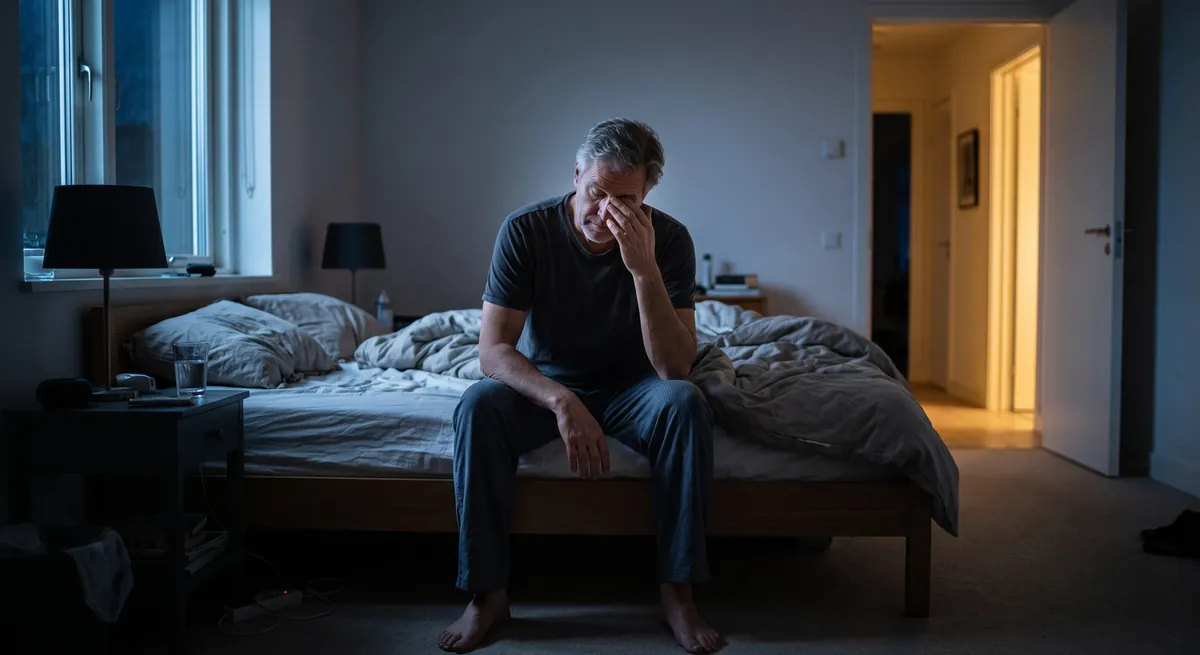
Most men first hear about PSA in one of two ways. A friend mentions his number went up and he’s waiting on a scan. Or a doctor slips the test into a routine blood panel and the result comes back with a figure nobody has really explained.
The test itself is an ordinary blood draw, but the result is harder to read than most men expect. A high PSA doesn’t mean cancer, a normal one doesn’t rule it out, and the question of whether to be tested at all is one that doctors and guideline panels have argued about for more than a decade.
What PSA actually measures
Prostate-specific antigen is a protein made by the prostate, the walnut-sized gland below the bladder. Normal prostate cells make it and so do cancerous ones, and a small amount leaks into the bloodstream. The blood test measures how much, in nanograms per milliliter (ng/mL).
A raised result tells you the prostate is producing more PSA than usual, but it can’t tell you why, and most of the arguments about the test come back to that gap.
Why a high number isn’t a diagnosis
Plenty of ordinary things push PSA up. The most common is benign prostatic hyperplasia, or BPH, the slow non-cancerous enlargement that happens to most men as they age. A bigger gland simply makes more protein. Prostatitis, meaning inflammation or infection of the prostate, can raise it sharply too.
Some causes are temporary. Ejaculation and vigorous exercise, especially cycling, can nudge the number up for a day or two, and a recent infection or prostate procedure can keep it elevated for a month or more. The National Cancer Institute’s PSA fact sheet suggests avoiding those activities for about two days before a test.
It works in the other direction as well. Finasteride and dutasteride, drugs commonly prescribed for an enlarged prostate or hair loss, lower PSA substantially, so doctors read results on a different scale for men taking them.
What counts as high
There is no single cutoff that separates safe from worrying. Historically, a level above 4.0 ng/mL was treated as abnormal and often led to a biopsy recommendation. Many doctors now adjust for age, using a lower threshold of around 2.5 for younger men and something closer to 5 for older men, whose glands are naturally larger.
The trend often matters more than any one reading. A number that climbs quickly from one year to the next gets more attention than a stable one that sits slightly above the line.
If a result comes back high, doctors usually start by repeating the test in six to eight weeks, because a good share of raised readings settle down on their own. If it stays up, many doctors now order an MRI of the prostate before deciding on a biopsy, which helps pick out the areas worth sampling and spares some men the procedure altogether.
The case against screening everyone
The harms of screening come from what a misleading number sets in motion. Only about one in four men who have a biopsy because of an elevated PSA turn out to have cancer. Biopsies are generally safe but can cause pain, bleeding and infection. Over ten years of regular testing, roughly 15 to 20 percent of men will get a result that leads to one.
Then there’s overdiagnosis. Many prostate cancers grow so slowly that they would never have caused symptoms or shortened a man’s life. Reviews of the screening trials estimate that somewhere between a fifth and half of the cancers PSA finds fall into that category. Treating them with surgery or radiation can leave men with incontinence or erectile problems in exchange for no real benefit.
For every thousand men screened over about a decade, roughly one or two are spared a death from prostate cancer.
For those men the benefit is enormous. Set against the false alarms and unnecessary treatment above, though, it’s small enough that most guideline panels leave the decision to each man and his doctor.

What the guidelines say, by age
The US Preventive Services Task Force, whose recommendations shape what insurers cover, says that for men aged 55 to 69 screening is an individual decision, made after talking through the benefits and harms with a doctor. For men 70 and older, it recommends against routine screening, because the harms tend to outweigh the benefits. An update to that guidance has been in the works.
The American Cancer Society suggests starting the conversation earlier for some men:
- At 50 for men at average risk who expect to live at least another ten years.
- At 45 for Black men, who face a higher risk of prostate cancer and of dying from it, and for men whose father or brother was diagnosed before 65.
- At 40 for men with more than one close relative diagnosed at an early age.
For men who do test, the society suggests retesting every two years if PSA is below 2.5 and every year if it’s at or above that level.
The overdiagnosis problem looks less stark than it did a decade ago, because more men diagnosed with low-risk cancer are now offered active surveillance, meaning regular PSA checks, scans and occasional repeat biopsies instead of immediate treatment. Treatment starts only if the cancer shows signs of growing.
Symptoms are a different question
Screening is for men who feel fine. If you’re dealing with urinary symptoms, the conversation changes, and most of those symptoms have nothing to do with cancer.
A weak stream, straining to start, dribbling, or getting up repeatedly at night usually point to BPH or other non-cancerous causes. Urologists rate these symptoms with a seven-question questionnaire called the International Prostate Symptom Score, and you can check your own IPSS with a free online calculator before an appointment. It measures how much your symptoms bother you. It isn’t a cancer test, and a low score is no reason to skip a screening conversation.
Some signs deserve a prompt visit regardless of age or screening history: blood in the urine or semen, being unable to urinate, new pain in the back, hips or pelvis that doesn’t go away, or unexplained weight loss.
Making the call
A man in his late 50s with a brother who had prostate cancer may reasonably want regular testing. A healthy man the same age with no family history may just as reasonably decide the odds don’t justify it, and both can be sensible choices if they’re made with the numbers in view.
It helps to decide before the needle goes in. Ask your doctor what your result would change, what happens if it comes back high, and whether an MRI would come before any biopsy. A PSA result is much easier to live with when you’ve already agreed what you’ll do with it.